About Oil and Gas Density Meters
Engineered and manufactured
in the USA with excellent
remote support
Excellent resistance to cutting
by sharp-edged objects
Will not Intrude upon,
Obstruct or Redirect the Flow
of Media
Vibration Resistant
Not Affected by the
Conductivity of the Media
Low Maintenance Costs
No Special Regulatory
permitting or Safety concerns
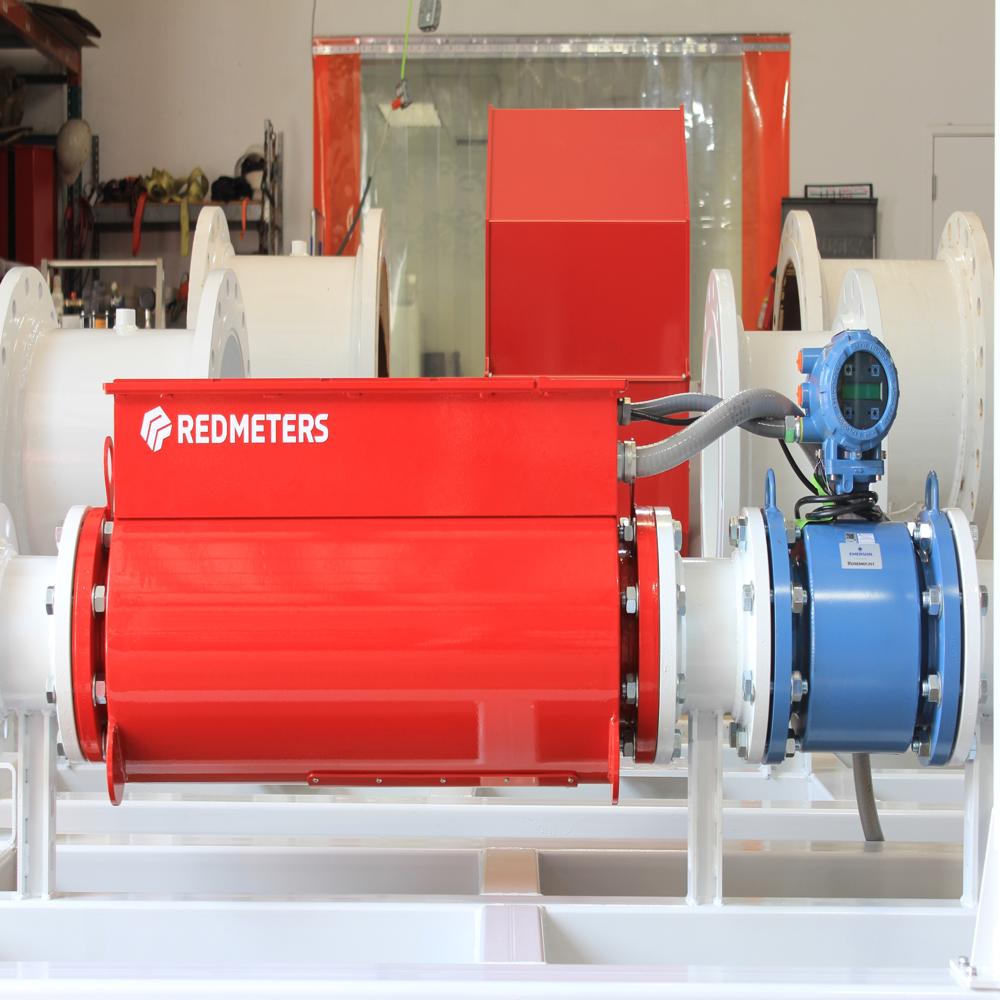
Superior Durability and VersatilityConstructed from stainless steel and corrosion-resistant alloys, this density meter is designed for prolonged service in aggressive oil and gas environments. The IP67-rated enclosure protects against water and dust ingress, making it suitable for a wide range of pipeline installations. Its robust build ensures reliable performance under extreme ambient temperatures and pressure conditions, while the flanged inline mounting allows for easy integration into existing process streams.
Advanced Connectivity and Easy MaintenanceOffering both analog (4-20mA) and digital communication protocols like HART, Modbus RTU/TCP, and Profibus, this meter simplifies integration with modern industrial control systems. The device features a self-cleaning, low-maintenance design, ensuring long-term accuracy without frequent manual intervention. Factory calibration provides out-of-the-box precision, while field recalibration is possible for ongoing assurance in dynamic process conditions.
FAQ's of Oil and Gas density meters:
Q: How is the density meter installed in oil and gas pipelines?
A: The density meter is typically mounted inline using ANSI or DIN flanged connections. Its robust, compact design (maximum height 600 mm) enables direct integration into existing process pipelines or streams, providing continuous real-time measurement.
Q: What environments and temperatures can the density meter withstand?
A: With an IP67 enclosure and corrosion-resistant housing, the meter is designed to operate reliably in harsh, hazardous environments. It can handle ambient operating temperatures from -40C to +60C, process temperatures up to +85C, and humidity levels up to 95% RH (non-condensing).
Q: What output signals and communication protocols are available?
A: The density meter supports both analog (4-20mA) and digital output signals. It is compatible with HART, Modbus RTU/TCP, and Profibus communication protocols, as well as Ethernet interfaces, ensuring seamless connectivity with various monitoring and automation systems.
Q: When is recalibration necessary and how is it performed?
A: The device is factory calibrated for immediate use, but it can also be recalibrated in the field if process conditions change or for routine maintenance. Field recalibration involves following the supplied procedures to adjust the meter's settings and ensure ongoing accuracy.
Q: What are the primary benefits of using this density meter in oil and gas applications?
A: This meter delivers high-precision, real-time density measurement with an accuracy of 0.001 g/cm3 and fast response time (<1 second). Its non-intrusive, self-cleaning design minimizes maintenance, and the device is suitable for both high and low flow rates, enhancing process efficiency and quality control in oil, gas, and slurry pipelines.
Q: Where can this density meter be applied?
A: It is ideal for continuous density measurement in oil, gas, and slurry pipelines-whether upstream, midstream, or downstream. The meter's ATEX and IECEx certifications also make it suitable for hazardous or explosive environments.
Q: What is the expected maintenance for this device?
A: Maintenance is minimal due to the meter's low-maintenance, self-cleaning construction. Its corrosion-resistant materials reduce wear, and the robust enclosure further extends service intervals, resulting in lower operational costs.




 Send Inquiry

 Send Inquiry
 Send Inquiry
 Send SMS
 Call Me Free